Sleep Mode: The People Who Need a Server Room to Drift Off
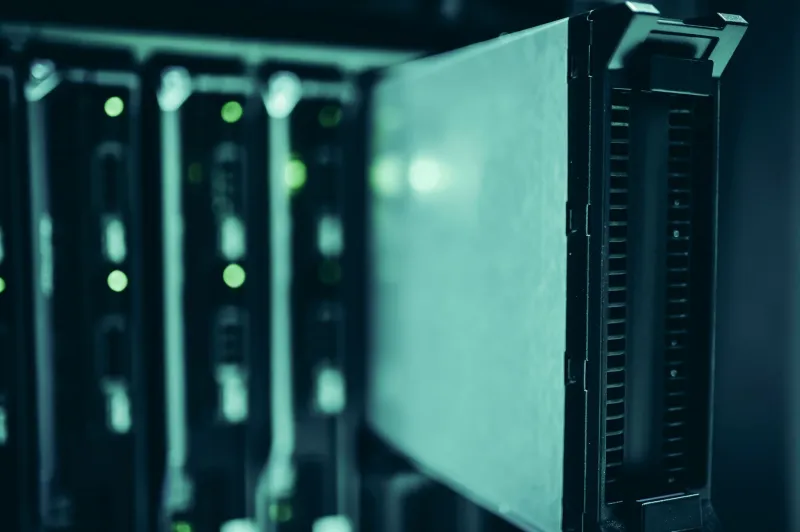
At 2:14 a.m. in a one-bedroom apartment in Portland, Oregon, someone opens a video of a data center aisle. There is no music, no rain, no whispered reassurance. There is a low mechanical hum, the tick of a fan, and the occasional click of metal cooling. They are asleep in minutes. This is not a niche joke anymore. It is a habit.
The Sound of Nothing Doing Its Job
Server room ASMR has been drifting around the edges of YouTube and Bandcamp for years, but in 2026 it feels less like a curiosity and more like a utility. Search for data center ambience and you will find hours-long recordings of server racks, cooling units, UPS systems, and the faint electrical whine of a room built to run without people. There are dial-up handshakes, too, and modem tones, and the clatter of old hard drives. The genre is infrastructure ambient: the sound of machines doing work you will never see.
Listeners describe it as grounding. The hum is boring on purpose. It does not ask for a reply. It does not recommend another track based on what you listened to three years ago. It is the opposite of a feed.
Field Recordings for People Who Never See the Rack
The people making these recordings are a mix of field recordists, sysadmins, and ambient musicians with a good microphone and a reason to stand still. Some record in colocation facilities with permission. Some record their own home labs, which are quieter and smaller but no less real. Some capture the sound of an office closet where the network switch has been humming since the Obama administration. A few use binaural mics to make the room feel like it has a left and right side.
The uploads are rarely polished in the way music is polished. That is the point. A fan loop that repeats too cleanly can feel fake. Listeners notice. The best recordings have small irregularities: a distant door, a change in pitch, a compressor kicking on. The machine is not performing. It is just present.
Why the Fan Is a Lullaby
Part of the appeal is acoustic. A steady broadband hum can mask tinnitus, street noise, and the small sounds of an apartment at night. It sits somewhere between brown noise and the drone of a refrigerator. But the deeper appeal is familiar. Anyone who grew up with a desktop tower under a desk, a laptop fan whining through a late essay, or a game console breathing in the dark has a body memory of machine noise as background safety.
Then there is the remote-work angle. Millions of people spent the last several years learning that the office is not a place so much as a set of sounds and interruptions. The data center is the office stripped of people. It is all infrastructure and no small talk. For some listeners, that is not eerie. It is soothing.
The Quiet After the Feed
The genre makes more sense when you put it next to everything else people listen to online. Podcasts demand attention. Playlists are curated by mood and behavior. ASMR videos often include role-play, tapping, and a person whispering directly into your ear. Server room audio offers none of that. It is sound without a subject. The machine does not know you are there.
That may be the real product. Not nostalgia for dial-up, exactly, but relief from being addressed. The hum is a room where nothing is expected of you. You can fall asleep without missing anything.
Not Quite Silence
There are caveats. Some recordings are looped and compressed into a smooth paste. Some are labeled ASMR when they are really just white noise with a thumbnail of blinking LEDs. And there is a mild irony in romanticizing data centers at a moment when their energy use and water consumption are under more scrutiny than ever. The hum is not innocent. It is the sound of a system with a footprint.
Still, the listeners keep coming back. They leave comments like 'this is the only thing that gets me to sleep' and 'my apartment is too quiet.' They are not trying to visit the cloud. They are trying to hear the floor beneath it. At 2 a.m., a fan is a fan. And sometimes that is enough.