Digging Through Digital Rubble: How Gen Z Is Rebuilding the Internet's Dead Aesthetics
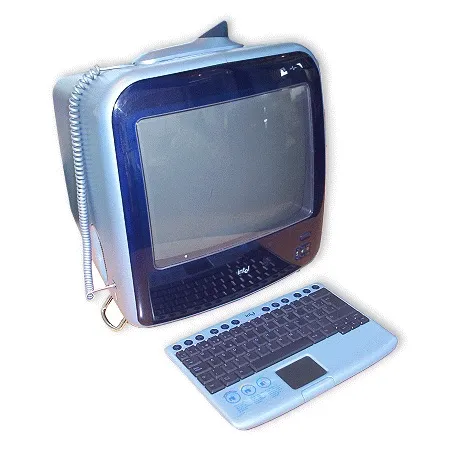
Photo: Retro user, CC BY-SA 4.0, via Wikimedia Commons
There's a TikTok account — you've probably landed on one like it — where someone has spent what appears to be a significant portion of their free time reconstructing the visual grammar of mid-2000s MySpace. The color schemes. The blinking cursors. The specific font choices that no living designer would make unironically. The AutoPlay music. It's meticulous. Almost reverent.
The person running it was probably eight years old when MySpace peaked.
This is aesthetic archaeology — the practice of excavating dead internet subcultures, brushing off the pixels, and presenting the artifacts to an audience for whom these things are history rather than memory. It's happening all over TikTok, across YouTube video essays, in Tumblr revivals and Discord servers dedicated to preserving the visual language of digital eras that most of the internet has moved past.
The question worth asking is: what exactly is being built here, and for whom?
The Subcultures Getting Exhumed
The range is wider than you might expect. Vaporwave — that early 2010s microgenre defined by slowed-down elevator music, pastel gradients, and Roman busts in neon lighting — has been thoroughly absorbed into mainstream aesthetic vocabulary, but TikTok creators are still going deeper, excavating its original Tumblr context and its roots in early internet utopianism and corporate dystopia.
Scene and emo culture from the mid-2000s is getting a full revival, complete with raccoon-striped hair tutorials, Myspace angle selfie recreations, and deep cuts from bands that peaked on Purevolume. Early YouTube gaming culture — the era of Machinima, commentary channels, and let's plays filmed on webcams with genuinely terrible audio — is being reconstructed with a kind of tender specificity that feels less like parody and more like documentary.
LiveJournal aesthetics. Early deviantART. The specific visual language of Neopets and early browser games. Newgrounds. Each of these had its own culture, its own community norms, its own creative vocabulary — and each of them either died quietly or got swallowed by the homogenizing forces of platform consolidation.
Now they're being dug up.
The Memory Problem
Here's where it gets genuinely interesting. A lot of the creators doing this work don't have firsthand memories of these eras. They're working from screenshots, archived pages on the Wayback Machine, YouTube compilations, and the accounts of older millennials who actually lived through it.
That creates a particular kind of reconstruction — one filtered through absence. When you don't have the lived experience of a subculture, you have access only to its artifacts. You see the aesthetic without the context. The fashion without the social dynamics. The music without the community infrastructure that gave it meaning.
Is that loss? Or is it actually a kind of creative freedom?
Maybe both. The recreations happening on TikTok are often more visually coherent than the originals were — because the messiness and contingency of actually living through a cultural moment has been edited out. What remains is a distilled, aestheticized version. A highlight reel of someone else's digital past.
Nostalgia as Raw Material
There's a useful distinction to make here between nostalgia and something else — call it aesthetic sampling. Nostalgia implies longing for something you've lost. But you can't be nostalgic for something you never had. What Gen Z creators are doing with these dead subcultures isn't exactly nostalgia. It's more like finding interesting material and building something new with it.
Vaporwave is a useful case study. By the time most current TikTok creators encountered it, it had already passed through multiple ironic and post-ironic cycles. They're not recovering vaporwave as it was — they're using its visual vocabulary as a tool, detached from its original meaning. The Roman busts and the sunset gradients are just elements now. Available for recombination.
The same thing is happening with emo and scene aesthetics. The kids recreating raccoon eyeliner tutorials on TikTok aren't necessarily invested in the emotional landscape of mid-2000s suburban alienation that gave scene culture its original energy. They're engaging with the surface — and finding that the surface still has something to offer.
What Survives the Excavation
Not everything translates. Some things get genuinely lost in the reconstruction.
Early internet subcultures existed in ecosystems of scarcity and friction. Finding the music you wanted required effort. Finding community required searching. The barriers to entry were high enough that participation meant something — you'd worked for it. The communities that formed around early YouTube, around LiveJournal, around deviantART, had a texture that came partly from those barriers.
TikTok's algorithmic abundance is structurally opposite to that. Content finds you. Community is frictionless. The aesthetic can be recreated but the underlying conditions that produced it are gone, and that changes what the aesthetic means when it's deployed in this new context.
What Gen Z is building isn't a restoration. It's a remix. And honestly? That might be the more honest way to engage with digital history — acknowledging that the past can't be recovered, only reinterpreted, and that the reinterpretation says as much about the present as it does about whatever came before.
The Archaeology Continues
There's something fitting about the fact that this is happening on TikTok — a platform so thoroughly optimized for the present tense, for immediacy and trend cycles measured in days, that it seems like the last place you'd find people doing careful archival work on internet subcultures from fifteen years ago.
And yet. The void has a long memory. The digital ruins are still there, still searchable, still full of material for anyone willing to dig. The creators doing this work are building something genuinely strange — a version of internet history assembled by people who weren't there, for audiences who mostly weren't either.
Whether that's preservation, performance, or something that doesn't have a name yet, it's worth paying attention to. The past keeps getting rebuilt. It never looks quite the same twice.