Engineered Amnesia: How Platforms Rewire Your Brain to Forget Why You Showed Up

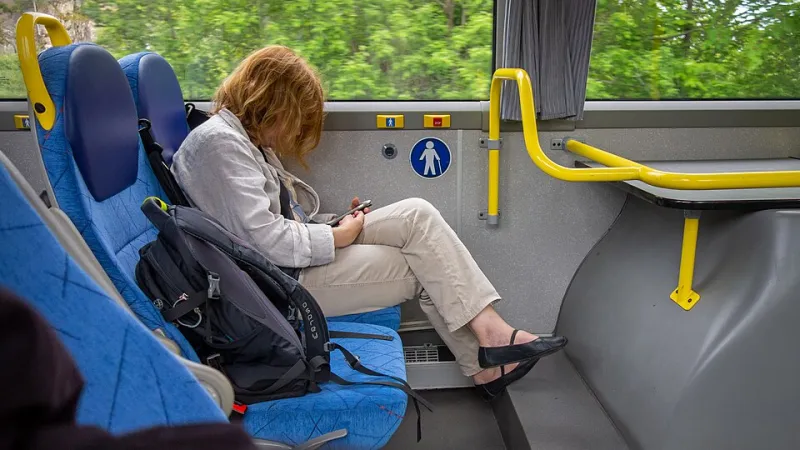
Photo: Roc0ast3r, CC0, via Wikimedia Commons
You had a reason. You definitely had a reason. Maybe it was a specific tweet you half-remembered, a DM you needed to answer, or just a quick news check before getting back to something that actually mattered. And then — nothing. Forty minutes dissolved. You're watching a compilation of home renovation fails, and the thing you came for is just... gone.
This isn't a personal failing. It's architecture.
The Interface Is Not Neutral
Every design decision on a major platform — the color of a notification badge, the velocity of a scroll, the way content loads just slightly ahead of your finger — is the result of thousands of A/B tests optimized for one core metric: time on site. Not satisfaction. Not utility. Just duration.
The infinite scroll, pioneered by Aza Raskin (who has since publicly apologized for it), was designed to eliminate what designers call "stopping cues" — the natural moments where a user might pause and reconsider whether they actually want to keep going. Pagination had stopping cues built in. Every page break was a tiny off-ramp. Infinite scroll paved over every single one of them.
What replaced those off-ramps is something closer to a sensory conveyor belt. Content arrives before you've finished processing the last piece. Your brain never gets the chance to file anything, let alone remember what it was doing before it started receiving.
Cognitive Overload as a Feature
Neuroscientists have a term for what happens when your working memory gets saturated with competing stimuli: cognitive load overflow. It's the mental equivalent of trying to juggle while someone keeps handing you more balls. At a certain point, the original task — the thing you were actually trying to do — simply gets bumped out of active memory.
Platforms engineer this state deliberately. The notification system isn't just a communication tool; it's a fragmentation device. Every ping is a context switch. And research from the University of California, Irvine found that after an interruption, it takes an average of 23 minutes to return to the original task with full focus. Scale that across a day of constant micro-interruptions and you're basically running on cognitive fumes by noon.
The algorithmic rabbit hole compounds this further. Recommendation engines aren't trying to give you what you want — they're trying to give you what will keep you moving forward. YouTube's algorithm is famously optimized for watch time, not relevance. Which is why a search for a specific documentary can send you spiraling through increasingly unrelated content until you're somewhere you never intended to be, with zero memory of the path that got you there.
The Neuroscience Behind the Drift
Dopamine is the obvious villain in most of these conversations, and while the dopamine loop is real — variable reward schedules do keep people pulling the lever — the deeper issue is what's happening to the prefrontal cortex, the part of the brain responsible for sustained attention, planning, and goal-directed behavior.
Chronic exposure to high-stimulation, low-depth content trains the brain to expect rapid novelty. When that expectation becomes hardwired, slower, more demanding cognitive tasks — reading a long article, holding a train of thought, sitting with ambiguity — start to feel genuinely uncomfortable. Not boring. Uncomfortable. The brain interprets the absence of stimulation as a problem to be solved, and it knows exactly where to find the solution.
This is the feedback loop that makes engineered amnesia so effective. The platform creates the cognitive conditions that make you want to return to the platform. It's not a conspiracy — it's just optimization doing what optimization does when the metric is engagement.
The Void Keeps Score
What's particularly strange about this moment is that most people are aware of it. Digital literacy around manipulation is at an all-time high. People talk openly about doomscrolling, brain rot, and the feeling of losing hours to an app they don't even particularly enjoy. And yet usage numbers keep climbing.
Awareness, it turns out, is not the same as immunity. Knowing that a slot machine is designed to make you lose doesn't change the neurological response to pulling the lever. Understanding the mechanism of a trap doesn't automatically free you from it.
Some researchers, like Dr. Gloria Mark at UC Irvine, argue that the solution isn't willpower but environment design — restructuring your digital spaces the same way a platform restructures them, but in your favor. Turning off notifications wholesale. Using browser extensions that impose stopping cues. Scheduling specific windows for specific platforms, treating them like appointments rather than ambient environments.
Reclaiming the Original Task
There's something almost philosophical about the experience of platform-induced amnesia. You arrive with intention and leave without it. The thing you meant to do exists somewhere in the past, in a version of you that still had a coherent thought. The platform consumed the intention and handed you back content instead.
The question worth sitting with isn't just "how do I use my phone less" — it's what it means to exist in a media environment that profits from your inability to remember why you opened it. These platforms are not neutral utilities. They're environments with goals, and those goals are not yours.
The next time you surface from a scroll session with no memory of your original purpose, don't reach for self-blame. Reach for the architectural critique. Something was designed to make that happen. And it worked exactly as intended.