Ghost Pages: Wandering the Ruins of the Old Internet
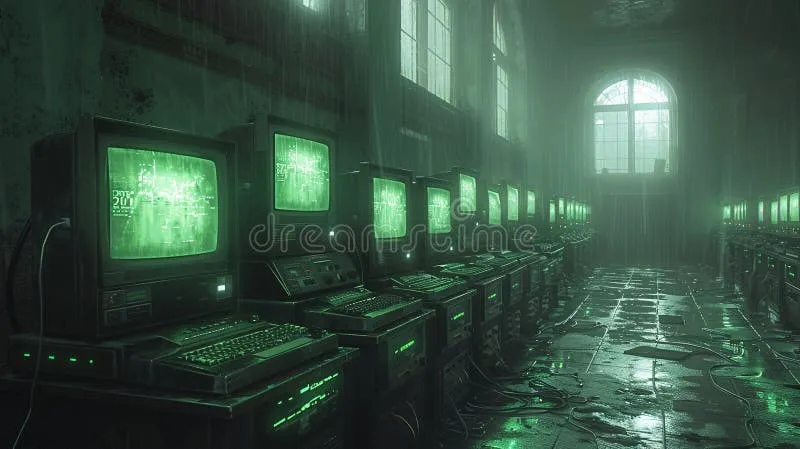
Photo: abandoned retro computer screen glowing in dark room, via thumbs.dreamstime.com
There's a version of the internet that nobody maintains anymore. It exists in fragments — a fan page for a TV show that ended in 2003, a forum thread debating the best MP3 player money could buy, a personal homepage with a visitor counter frozen somewhere in the low thousands. Nobody updated these pages. Nobody deleted them either. They just... remained.
This is the archaeology of the web, and it's weirder and more poignant than most people expect.
The Wayback Machine Is a Time Portal Nobody Talks About Enough
The Internet Archive's Wayback Machine has been quietly hoarding snapshots of the web since 1996. At this point it holds over 860 billion web pages — a number so large it essentially loses meaning. What it actually holds is harder to quantify: the emotional residue of millions of people who put pieces of themselves online before they fully understood what that meant.
You can pull up an archived version of MySpace from 2006 and watch the layout render in all its chaotic, glittery glory. You can find early Facebook before the timeline existed, when profiles were sparse and weird and kind of honest. You can find personal blogs from the early 2000s written by teenagers who are now in their 30s, documenting crushes and bad days and inside jokes that reference things nobody outside their friend group would ever understand.
This stuff wasn't made for posterity. It was made for right now, which is exactly what makes it so strange to encounter later.
What Digital Ruins Actually Look Like
Abandonment on the internet isn't dramatic. There's no overgrowth, no crumbling facade. A dead website looks almost identical to a live one, at least at first glance. The difference is in the timestamps — the last post from 2011, the copyright footer that reads "© 2008," the broken image placeholders where someone's avatar used to be.
Some of the most fascinating ruins are the communities. Message boards built around niche interests — obscure video games, regional music scenes, specific dietary lifestyles — that once had hundreds of daily active users and now exist as read-only monuments. The conversations are still there. The arguments, the inside jokes, the genuine friendships forming in real time across threads. But the people are gone, scattered to newer platforms that will eventually become ruins themselves.
There's a subreddit called r/DeadInternetTheory that takes a more conspiratorial angle on all this, but you don't need to go that far to feel something uncanny about it. The simple fact that human connection happened in these spaces, and then stopped, is strange enough on its own.
The Archivists Doing the Work Nobody Asked Them to Do
Beyond the Wayback Machine, there's a loose network of independent archivists doing preservation work that is equal parts obsessive and genuinely important. Groups like Archive Team — founded by Jason Scott, who also works at the Internet Archive — have raced against corporate shutdown timers to scrape and save platforms before they go dark.
When Google+ announced its shutdown in 2018, archivists mobilized. When Vine went dark in 2017, people scrambled to preserve clips before the servers went cold. When Tumblr's NSFW purge in 2018 effectively killed a significant chunk of the platform's creative community, entire archives of artwork and writing vanished without a formal preservation effort in place.
These moments reveal something uncomfortable: we build our digital lives on platforms we don't own, and those platforms can disappear or transform beyond recognition at any time. The archivists understand this. Most users don't think about it until it's already too late.
Nostalgia Isn't the Only Thing Going On Here
It's easy to frame all of this as nostalgia — and nostalgia is definitely part of it. There's a whole aesthetic movement around "old web" design that romanticizes the chaotic, personal, handcrafted feel of early internet culture. Web designers are deliberately invoking GeoCities-era layouts, blinking text, and tiled backgrounds. It's a reaction to how sanitized and algorithmically optimized the modern web has become.
But dig a little deeper and the emotional texture gets more complicated. Reading through old forum posts isn't just warm and fuzzy. It's also a confrontation with impermanence — a reminder that the things we build online are fragile in ways we rarely acknowledge. That the communities we invest in can evaporate. That the version of yourself you put online in 2009 is, in some sense, still out there, frozen in a Wayback Machine snapshot, saying things you barely remember believing.
There's also a class dimension worth noting. The early web was disproportionately built by people with access to computers and broadband — which in the US in the late 90s meant a specific demographic. The ruins of that internet reflect those gaps. Whose stories got preserved? Whose platforms got archived? The Wayback Machine crawls publicly accessible pages, which means private communities, locked-down social networks, and platforms that blocked crawlers left smaller footprints.
What Gets Lost When the Servers Go Dark
In 2009, GeoCities shut down. Yahoo, which had acquired it in 1999 for $3.57 billion at the peak of dot-com mania, finally pulled the plug. Millions of personal homepages — built by real people who cared deeply about them at the time — were deleted. Archive Team managed to save a significant portion, roughly 650 gigabytes of data, but plenty was lost.
Think about what that actually means. Someone spent hours building a page about their favorite band. Someone else documented their city's local punk scene. A kid made a shrine to their favorite anime. None of it was "important" by conventional standards. All of it was a genuine artifact of how people used the internet when it still felt like uncharted territory.
The loss of these spaces isn't just about nostalgia. It's about the historical record. Future researchers studying early internet culture are going to hit gaps that can't be filled. The informal, personal, chaotic web of the 1990s and early 2000s is underrepresented in what we've managed to preserve, and that distorts our understanding of what the internet actually was — and what it meant to the people living inside it.
The Voidframe Angle
There's something fitting about the fact that the most honest version of the internet — the one built by individuals for no particular reason, with no engagement metrics attached — is the one we have to dig for now. The current web is optimized, surveilled, and monetized to a degree that would have seemed dystopian to the person who spent a weekend in 1997 hand-coding a page about their hamster.
The ruins are a signal from somewhere older. They don't perform. They don't convert. They just exist, quietly, in archived snapshots and cached pages, waiting for whoever is curious enough to go looking.
If you want to feel something real about the internet, spend an hour with the Wayback Machine. Pick a year. Pick a URL. See what's still there.