Hard Drives as Holy Ground: The Quiet Faith of the Digital Hoarder
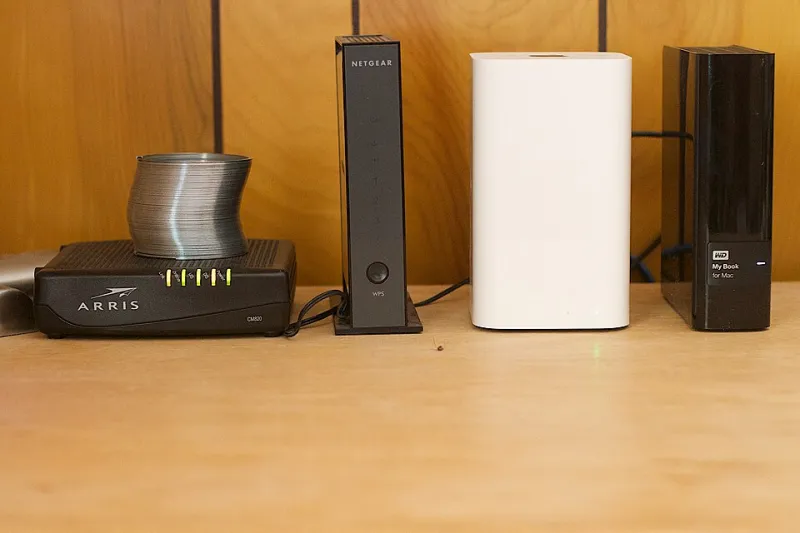
Photo: Alan Levine, CC BY 2.0, via Wikimedia Commons
Let me describe a scene that will either sound familiar or sound unhinged, depending on where you stand.
A closet. Inside it, a NAS — a network-attached storage box, four bays, red LEDs blinking like a heartbeat. On it: roughly 11 terabytes of music, most of it ripped from CDs bought at used record stores between 2009 and 2016. Every album art embedded. Every tag curated by hand at 1 a.m. There's also a film archive, a folder of scanned family photos going back four generations, and backups of backups, because this person has been burned before.
They stream almost nothing. They own almost everything they love. And they are not alone.
The Ownership Vacuum
Here's the uncomfortable truth of the streaming era: you don't own your media anymore. You rent access to it, and the landlord can change the terms overnight.
We've all felt it by now. The show that vanished from a platform because of a tax write-off. The album that disappeared over a licensing dispute. The ebook you "bought" that got remotely revoked. The digital movie library that folded, taking everyone's purchases with it. Each incident gets a news cycle, a round of indignant tweets, and then everyone goes back to renting.
The hard drive hoarders are the ones who didn't go back.
The Vault as Identity
What started as practical backup culture — burn your CDs, back up your photos — has hardened into something with its own values, its own communities, its own vernacular. Subreddits dedicated to data hoarding read like monastic orders discussing preservation technique. Self-hosted media server setups are shared like shrines, all cable management and soft LED lighting. There are people who have built local archives of regional public radio, defunct video game magazines, and public domain films, maintained with the diligence of an archivist and the passion of a fan.
And yes, some of it edges into legally gray territory. But a huge portion of it is entirely legitimate: ripping your own discs, archiving your own purchases, backing up your own life. The point isn't piracy. The point is custody.
I'd argue this is a genuinely new relationship with media, and the closest analogy isn't technological — it's religious. Think about the structure of it. A dedicated physical space (the server, the shelf of drives). Rituals of maintenance (backups, checksums, the quarterly audit of the archive). A doctrine of impermanence (everything streams to nothing; only the local copy endures). A community of the faithful. And a quiet sense of moral superiority over the unconverted, which every religion has.
The Rebellious Part
The op-ed part of this piece is simple: building a personal digital vault has become a small act of rebellion, and more people should take it seriously.
Not because streaming is evil — it's often convenient, and the hoarders I know still use it for discovery. But because a culture where nobody owns anything is a culture where nothing is safe. Licensing decisions made in a boardroom in Burbank shouldn't determine what art is accessible next year. Your memories, your music, your movies — these shouldn't live exclusively on someone else's terms.
There's also something deeper going on. The act of curating a local library forces you to decide what you actually value. Streaming is infinite and therefore meaningless; you'll never finish it, so why engage deeply? A 4-terabyte drive has edges. You choose what earns a place on it. That choice is a form of taste, and taste has been quietly atrophying in the algorithmic feed era.
The Ritual Worth Keeping
If you're tempted — and you should be — it's easier than it sounds. You don't need a server rack. An external drive and a folder structure will do. Rip the discs you already own. Back up your photos in two places, one of them offline. Download the albums you love instead of just adding them to a playlist that can be revoked.
The truth is, most of us won't need our vaults. The licenses will hold, the platforms will persist, the shows will stay up. But when they don't — and they won't, eventually — the person with the humming box in the closet will still have the signal. Everyone else will have had a subscription.
Build the shrine. It's worth it.