Muted by Default: The Slow Death of the Notification That Meant Something
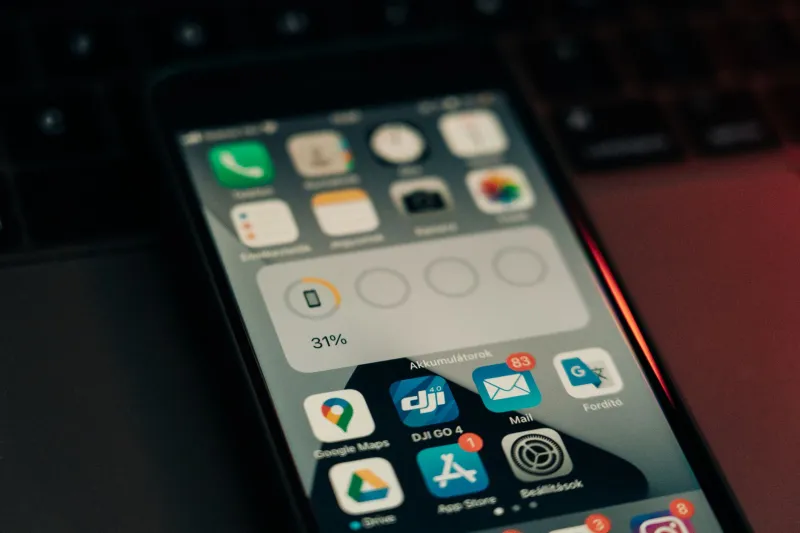
There's a specific kind of dread that hits when you unlock your phone and see 47 unread notifications. Not excitement. Not urgency. Just a low, gray exhaustion — the same feeling you'd get walking into a room where everyone is shouting at once and nobody has anything important to say.
We've been here a while. Long enough that most of us don't even register the feeling anymore. It just is. The buzz, the chime, the red badge — all of it has collapsed into ambient furniture, part of the background radiation of daily life. Which is wild, if you actually stop to think about it. We built these systems to connect us faster. Instead, they turned into a graveyard of sounds nobody hears.
When the Ping Actually Meant Something
Cast your mind back to the early smartphone era — roughly 2008 to 2012 — and notifications were genuinely kind of exciting. A buzz from your pocket meant something happened. Someone texted you. An email landed. A friend liked your photo. The signal-to-noise ratio was high enough that your brain still treated each alert as a small, meaningful event.
The psychology behind this is pretty well-documented. Dopamine doesn't reward outcomes — it rewards anticipation. A notification is a tiny, wrapped present. You don't know what's inside. That uncertainty is the whole mechanism. Early apps understood this intuitively, even if they couldn't have named the neuroscience behind it. The chime was a hook. The hook worked.
But hooks only work when fish aren't expecting them.
The Escalation Nobody Voted For
Somewhere around 2013 or 2014, the math changed. Apps multiplied. The average American smartphone user today has somewhere north of 80 apps installed, and a significant chunk of them are fighting for the same sliver of attention. When everyone is shouting, the instinct is to shout louder.
So they did. Notification strategies got aggressive fast. Apps that used to alert you only when something real happened started manufacturing reasons to ping you. Your horoscope is ready. Someone you might know just joined. You haven't opened us in three days. A friend is nearby. There's a new post in a community you follow. Flash sale ends in two hours.
None of these are wrong, exactly. They're just... hollow. They're the digital equivalent of a telemarketer using your first name — technically personalized, functionally meaningless. And our brains, which are adaptive and ruthless, noticed the pattern almost immediately. If everything is urgent, nothing is. The anticipatory dopamine response dulled. The hook stopped catching.
The technical term researchers use is notification fatigue. But fatigue implies you were tired from doing something. This feels more like a kind of learned indifference — a protective numbness the brain developed because the alternative was constant low-grade anxiety.
The Phantom Layer
Here's where it gets genuinely strange. Notification fatigue doesn't just make us ignore alerts — it starts to warp our perception of them. Studies on phantom vibration syndrome, which sounds made-up but is absolutely real and documented, show that heavy smartphone users regularly feel notifications that never happened. The brain, primed to expect interruption, starts generating the signal itself.
You've probably experienced this. You're in a meeting, or watching something, or just sitting quietly, and you swear your phone buzzed. You check it. Nothing. That's your nervous system running a script that no longer requires external input. The notification has become internalized. It lives in you now.
This is the void talking back. We spent years training ourselves to respond to a stimulus, and now the stimulus has become psychological infrastructure. The apps don't even need to ping you anymore. You ping yourself.
The Mute Button as Survival Mechanism
The cultural response to all of this has been fascinating to watch. Mass muting — silencing entire app categories, turning off badges, setting phones to Do Not Disturb as a permanent state rather than an occasional one — has become standard behavior, especially among younger users who grew up inside the noise and developed immunity faster.
Apple and Google both introduced notification management overhauls in recent years, which tells you everything. When the platforms that profit from engagement start building tools to help you ignore engagement, the system has broken down in a pretty fundamental way. iOS notification summaries, Android's notification channels, the Focus modes — these are all essentially admission that the original design philosophy failed.
And yet the apps keep sending. Because even if your open rate is 2%, that's still something. Even a graveyard gets visitors sometimes.
What Gets Lost in the Static
The real cost isn't annoyance. Annoyance is manageable. The real cost is that when something genuinely matters — a message from someone you love, an alert that actually requires action, a piece of information that's actually time-sensitive — it arrives wearing the same clothes as the spam. There's no visual or sonic language left to distinguish important from irrelevant. The channel is corrupted.
Communication researchers have a concept called signal degradation — the idea that when a medium gets overloaded with low-quality transmissions, the high-quality ones become harder to detect. That's exactly what happened here. The apps that cried wolf so many times that we stopped listening have made it harder to hear the actual wolves.
Some people have started keeping a second phone. Or a dedicated device for only the communications that matter — a small, quiet thing that only a handful of people have access to. Which is, if you think about it, just reinventing the landline. Full circle.
The Quiet on the Other Side
There's a small but growing number of people who've gone further — not just muting apps but deleting them wholesale, stripping their phones down to a handful of tools, opting out of the notification economy entirely. They describe the experience the way people describe moving from a city to the country: disorienting at first, then startlingly peaceful, then just normal.
The silence, it turns out, is something you have to relearn how to inhabit. Because we've been so thoroughly trained to fill it.
The notification graveyard isn't just a metaphor for ignored alerts. It's what happened to a certain kind of attention — the kind that was present, responsive, genuinely tuned in. That attention got worn down, overdrawn, and finally just... switched off. Whether we can switch it back on is an open question.
Your phone is buzzing right now, probably. You already know you're not going to check it.