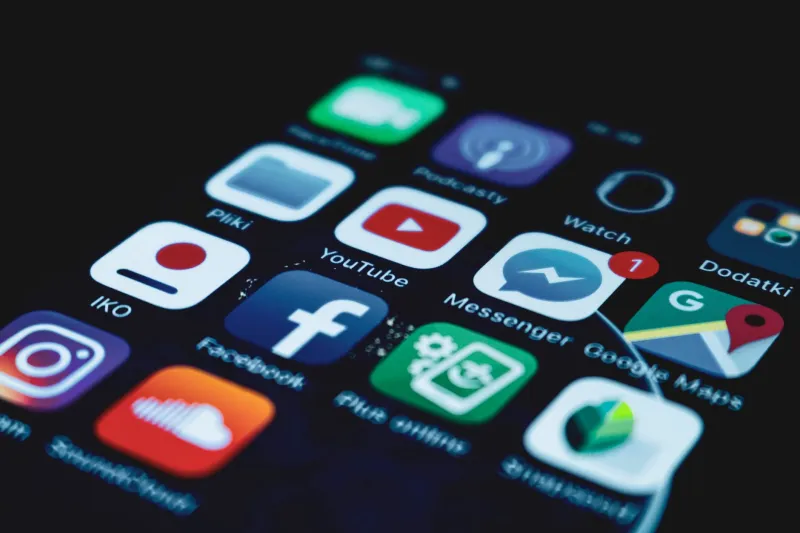
Buzz from the Void: How Dead Apps Keep Whispering Your Name
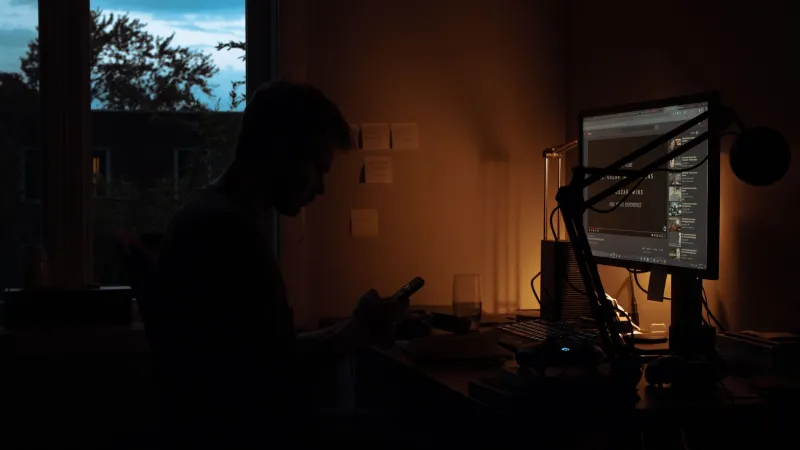
Somewhere between 11 PM and midnight, your phone lights up. The notification reads something like "You have 3 unread updates waiting!" or "Someone you might know just joined." You squint at the screen. The app in question? You haven't touched it since sometime around last Thanksgiving. Maybe earlier. You're not even sure why it's still installed.
You dismiss the alert. You go back to sleep. The app stays exactly where it was.
This is the notification graveyard — and nearly every smartphone in America has one.
The Art of the Phantom Ping
Push notifications were originally designed to be useful. Genuinely useful. A message from your mom. A flight delay. A fraud alert. The kind of interruption that actually justifies the intrusion. Somewhere along the way, though, platforms figured out that the same delivery mechanism could be weaponized for re-engagement — and they've been pulling that trigger ever since.
The logic is pretty simple from a product perspective: a dormant user is a lost user, and a lost user represents lost revenue. So instead of accepting the breakup, apps send flowers. Repeatedly. At weird hours. With increasingly vague subject lines designed to trigger just enough curiosity that you tap through without thinking.
What they're exploiting isn't loyalty. It's reflex.
Your brain is wired to treat an unresolved notification like an open loop. Psychologists sometimes call this the Zeigarnik effect — the tendency to remember and fixate on unfinished tasks more than completed ones. App designers didn't invent this quirk, but they've absolutely learned to farm it. That little badge on an icon you haven't opened in months isn't informing you of anything. It's just keeping the loop open.
Why You Never Actually Turned Them Off
Here's the uncomfortable part: most people never fully opt out. Part of that is friction by design. Notification settings are buried. Platforms make it easy to mute individual alert types while leaving others active, so you think you've handled it when you haven't. You turned off the marketing emails, but the push alerts kept running. You disabled one category of notification, but the app quietly re-enabled it after an update.
But some of it is also just psychological inertia. Turning off notifications from an app feels like a commitment — like you're officially declaring it dead. And people are surprisingly reluctant to do that, even for apps they genuinely don't use. There's always that low-grade sense that maybe you'll want it again. Maybe it'll become relevant. Leaving the notifications on is a way of keeping the door cracked without having to think about whether you actually want anyone walking through it.
Platforms know this. They design for it.
Re-engagement as Resurrection
The marketing term for what's happening is "re-engagement campaign," and it's one of the most aggressively optimized corners of the mobile app industry. Companies spend real money figuring out exactly when to ping you, what language to use, and which psychological triggers are most likely to get a lapsed user back through the door.
The timing isn't random. Many platforms use behavioral data to identify windows when you're most likely to be idle — commute hours, late evenings, Sunday afternoons. The copy isn't random either. Phrases like "You're missing out" or "It's been a while" are tested and iterated on the same way ad copy is. Some of these notifications are personalized using your old activity data, surfacing content that resembles things you engaged with back when you were active, trying to reconstruct the version of you that cared.
It's less a reminder and more a séance.
The False Sense of Staying Connected
What makes this particularly strange is the way it distorts your relationship with your own attention. When an app you've mentally discarded keeps buzzing you, it creates a kind of ambient presence — a low-level sense that the thing is still part of your life, even when it isn't. You're not using it, but you're still being used by it.
This matters more than it might seem. Attention is finite. Every notification that lands in your awareness, even one you immediately swipe away, takes a small cut of your cognitive bandwidth. Multiply that across a dozen dormant apps running re-engagement cycles in parallel and you've got a steady background hum of irrelevant interruption that most people have just accepted as normal.
There's also a subtler effect: repeated exposure keeps the app's brand alive in your mental space. Even if you never tap through, you're being reminded. The notification doesn't need to convert you today. It just needs to keep the name familiar enough that when something changes — a friend mentions it, a news story surfaces, you're bored on a Saturday — the app is still in the frame.
What It Actually Takes to Leave
Real disengagement requires more deliberate action than most people realize. Deleting an app doesn't automatically revoke its notification permissions on all platforms — in some cases, the data associated with your account keeps cycling through re-engagement flows even after the app is gone, waiting for you to reinstall. You have to go further: revoke permissions at the OS level, unsubscribe from email lists, and in some cases actively request account deletion rather than just deactivation.
That's a lot of steps for something that should, in theory, be as simple as just... stopping.
The asymmetry is intentional. Signing up for an app is designed to take thirty seconds. Fully extracting yourself is designed to take effort. Every additional step in the exit process is another opportunity for the platform to re-intercept you, remind you of what you're leaving, and offer you a reason to stay.
Silence as a Setting You Have to Choose
There's something worth sitting with here — the idea that digital quiet isn't a default. It's a configuration. Your phone, out of the box with a handful of apps installed, will make noise for things you don't care about indefinitely, unless you specifically and repeatedly tell it not to. Silence requires maintenance.
That's a strange inversion of how most of us think about attention. We tend to imagine that we're the ones choosing where to look, what to engage with, what to let into our headspace. But the notification graveyard suggests something different: that a significant portion of our daily interruptions are being scheduled by platforms we've already moved on from, running automated campaigns to haul us back.
Your phone isn't buzzing because something important happened. It's buzzing because an algorithm decided it was time to try again.
The question is whether you're going to keep letting it.