Endless Play: How Streaming Killed the Art of Stopping
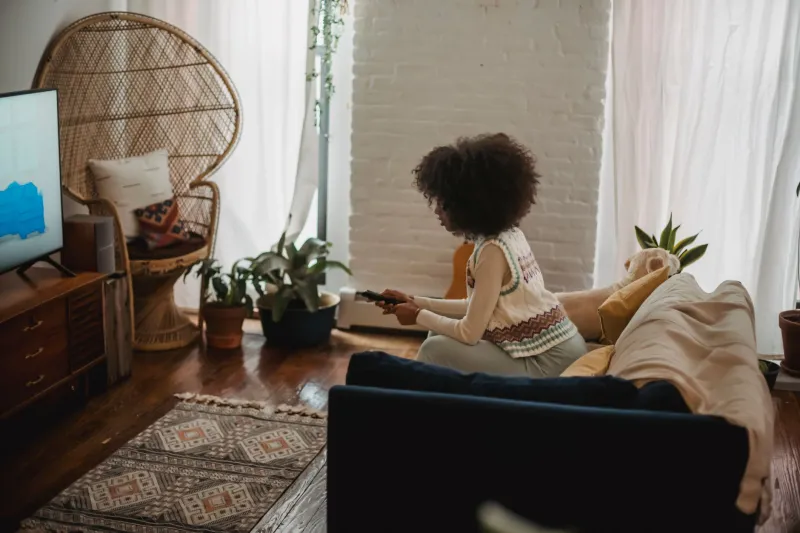
There used to be a moment. You know the one. The theme music swells, the credits crawl, the screen cuts to black. Maybe it's 10 PM on a Thursday. You sit there for a second, feel the residue of whatever you just watched, and then — consciously, deliberately — you decide what happens next. You go to bed. You call someone. You just sit there in the quiet.
That moment is basically extinct now.
Streaming didn't just change how we watch things. It surgically removed the natural stopping points that once gave entertainment its shape. And in doing so, it rewired something deeper than our viewing habits — it rewired our relationship with endings, attention, and the strange human need to feel like something is done.
The Architecture of the Old Rhythm
Before Netflix started asking "Are you still watching?" (a question it now barely bothers with), television was structured around friction. Not annoying friction — meaningful friction. Commercials were interruptions, sure, but they were also tiny resets. Weekly episode schedules created anticipation. The act of waiting for the next installment was part of the experience.
Think about how people talked about shows like The Sopranos or Lost in real time. Water cooler culture wasn't just nostalgia bait — it was a byproduct of shared pacing. Everyone was on the same chapter. The gaps between episodes gave you time to think, speculate, argue. The story breathed.
Streaming compressed all of that breathing room into nothing. When Stranger Things drops a new season, the cultural expectation is that you've consumed the whole thing before Monday morning spoils it. The rhythm isn't weekly anymore. It's: receive, devour, move on.
Autoplay as Architecture
The autoplay countdown timer — that little circle ticking down in the corner of your screen — is one of the most quietly radical UX decisions in entertainment history. It doesn't ask you if you want to continue. It asks you to actively stop if you don't. The default state is more. The default state is never finished.
This is a fundamental inversion. Old media required you to opt in to the next thing. Streaming requires you to opt out. And opting out, as any behavioral economist will tell you, is significantly harder than it sounds. The path of least resistance is always the next episode. The couch has gravity. The remote is far away. Your thumb is already resting on the controller.
Platforms know this. They've known it for years. The autoplay feature wasn't an accident or a convenience — it was a retention strategy dressed up as a feature. Keep the session alive. Keep the user in the frame.
What We Lost When We Lost the Pause
Here's the thing nobody really talks about: those old stopping points weren't just logistical. They were psychological.
When a show ended for the week, your brain had time to consolidate it. You dreamed about it. You turned it over while you were in the shower. You formed opinions that weren't just immediate reactions. Slow media created slow processing, and slow processing is actually how we build meaning from stories.
Binge culture collapses that timeline. You finish a season in a weekend, feel a brief hollow satisfaction, and then it's just... gone. Filed somewhere in the back of your memory with the other twenty shows you've consumed this year. Ask yourself right now: what was the last show you watched that you could actually describe in detail, episode by episode? If you binged it, the odds aren't great.
This isn't about intelligence or attention span in some moral panic sense. It's about architecture. When the container changes, what you put in it changes too.
The Infinity Problem
Streaming also introduced something genuinely new to entertainment: the experience of infinite content. Not just a lot of content — effectively unlimited content, algorithmically surfaced, designed to always have one more thing ready for you.
This creates a paradox that feels uniquely modern. There's always something to watch, which means there's never any urgency to watch any specific thing. The scarcity that once made television special — this show is on tonight, you'll miss it if you don't tune in — has been completely eliminated. And without scarcity, a certain kind of investment disappears too.
When everything is available all the time, nothing feels particularly precious. You can always come back to it. Except you don't, usually. The queue grows. The watchlist becomes a monument to good intentions. And somehow, despite having access to more entertainment than any human in history, you end up scrolling for forty-five minutes before settling on a rewatch of something you've already seen three times.
The Nostalgia for Endings
There's a reason people talk about "appointment television" with this weird reverence now. Succession was discussed differently than most streaming shows — partly because of its quality, sure, but also because HBO's weekly release schedule forced the old rhythm back into the equation. People had a week between episodes. They chewed on it. They came to the next one with actual anticipation.
That felt notable. Almost quaint. Like discovering that food tastes better when you're a little hungry.
Some creators are pushing back against the binge model more explicitly. Filmmakers who insist their work be watched in a theater, without phones, without pause. Writers who release serials on deliberate weekly schedules. There's a growing awareness that the delivery mechanism shapes the experience in ways that aren't trivial.
But these are countercultural gestures against a very powerful current. The default infrastructure of streaming is built for volume and retention, not for the kind of contemplative space that makes storytelling land with weight.
Living Inside the Frame
Voidframe exists in this exact tension — between signal and noise, between the endless feed and the moment where something actually sticks. The internet, like streaming, has largely abolished its own stopping points. There's no closing time. No last page. No credits.
What we're left with is a continuous present tense, always mid-episode, never quite at an ending.
Maybe the question isn't how to get back to the old rhythm — that's probably gone. Maybe it's about learning to manufacture your own stopping points inside a system that was specifically designed to prevent them. Closing the laptop. Letting the credits actually roll. Sitting in the dark for a minute before the next thing starts.
The pause button never existed as a platform feature. But it still exists in you — if you remember to press it.