Still Online: A Tour of the Platforms Everyone Left Behind
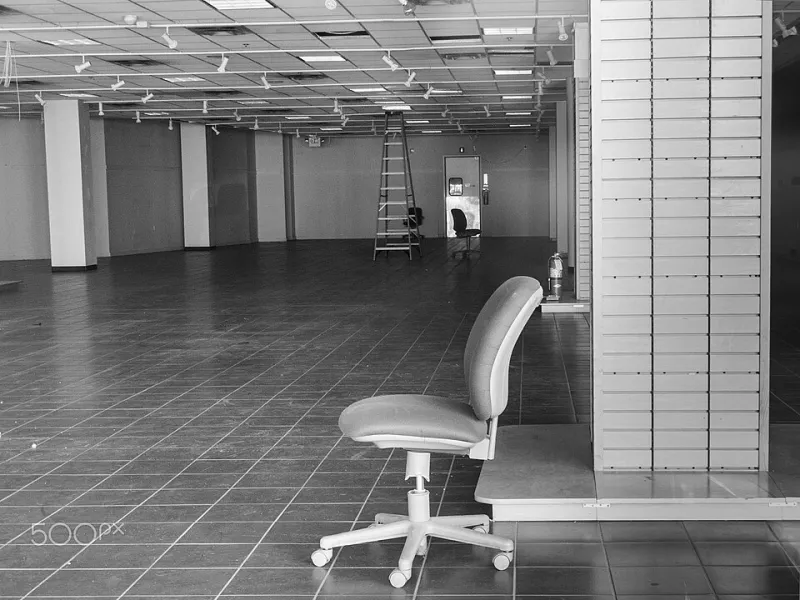
Photo: Jason Knauer, CC BY 3.0, via Wikimedia Commons
Log into MySpace right now. Go ahead. The site still loads. Tom is still your friend. Some profiles, untouched since 2009, are still technically public — frozen mid-sentence, like a digital Pompeii. Nobody's watching. Nobody's posting. But the infrastructure hums along, indifferent to its own irrelevance.
This is the quietest corner of the internet, and it's bigger than you think.
The Long Tail of Dead Platforms
When we talk about platforms dying, we usually mean something dramatic — a shutdown announcement, a final log-off, servers going dark. But most platforms don't die that way. They bleed out slowly. The user count drops. The feed slows. The notifications stop coming. And then one day you realize you haven't opened the app in eight months and nobody texted you about it.
Friendster. Vine. Google+. Tumblr post-2018. Digg. Livejournal. Plurk. The list of once-thriving networks that have entered this liminal state — not dead, not alive, just quiet — is longer than most people realize. Each one carried entire subcultures inside it. Inside jokes with no outside context. Communities built around hyper-specific interests. Relationships that existed nowhere else.
When the platform hollows out, all of that goes with it. Or most of it. Because some people never leave.
The Holdouts
Meet the users who stayed.
On what remains of Tumblr, a contingent of users — largely young, largely queer, largely uninterested in the algorithmic churn of TikTok — have settled into something that functions less like a social network and more like a small town. The platform shed the majority of its user base after its infamous 2018 adult content ban, and what's left is oddly intimate. People know each other. The jokes are layered and self-referential in ways that require years of context to decode.
"It's actually better now," one longtime user told me, completely seriously. "The people who are here chose to be here. There's no one trying to go viral. Everyone's just... posting."
You hear variations of this from holdouts on almost every declining platform. There's a genuine affection for the emptiness. The reduced crowd filters out the noise. What's left feels like a secret, or at least like something that belongs to the people who stuck around.
On forums like Something Awful — which has been operating since 1999 and shows no signs of shutting down despite being largely invisible to anyone under 30 — long-term members describe the platform with a mix of irony and genuine nostalgia. The culture there is dense, impenetrable to outsiders, and completely unbothered by its own obscurity. It was never trying to scale. It just kept going.
What Gets Lost When a Platform Empties
Here's what's actually at stake when a community disperses: not just the people, but the artifacts.
Every platform develops its own vernacular. Vine gave us a specific comedic rhythm — the six-second setup and punchline — that shaped an entire generation of internet humor and still echoes through TikTok, even among people who never used Vine. When Vine shut down in 2017, that archive went with it, at least temporarily. The cultural vocabulary it generated has survived, but the original context — the specific videos, the specific creators, the specific moment — is partially lost.
Google+ had active communities of photographers, science communicators, and niche hobbyists who built real followings on a platform that the broader public never took seriously. When Google killed it in 2019, those communities scattered. Some rebuilt on other platforms. Many didn't. The conversations, the comment threads, the collaborative projects — gone, because Google didn't bother building meaningful export tools before pulling the plug.
This is the part that frustrates digital archaeologists the most. "Platforms treat their own cultural output as a liability," one researcher working on social media preservation told me. "When they shut down or hollow out, they're not thinking about what they're destroying. They're thinking about server costs."
The Preservation Problem
A loose network of archivists and obsessives is trying to change that, at least at the margins.
The Archive Team — a volunteer collective distinct from the Internet Archive, though the two collaborate — has made it their mission to scrape and preserve platforms before they disappear. They've saved data from dozens of services over the years, racing against shutdown deadlines with varying success. Their work exists in a legal gray zone and operates largely without institutional support.
The Internet Archive's own social media preservation efforts are constrained by copyright law, platform terms of service, and the sheer volume of content being generated. They can't save everything. Nobody can.
What gets preserved tends to be whatever a small group of dedicated people decided was worth saving. Which means the archive of internet culture is necessarily incomplete, shaped by the tastes and priorities of whoever happened to be paying attention when the clock ran out.
Why Some Platforms Survive and Others Don't
The conventional wisdom is that platforms die because they lose users to something better. And that's often true. But it's not the whole story.
Reddit has survived longer than almost anyone predicted, partly because it's genuinely hard to replicate the community infrastructure it's built — the subreddits, the moderator culture, the accumulated karma and credibility of long-term accounts. Moving a Reddit community elsewhere isn't just a technical migration. It's a social one, and social migrations are hard.
Facebook, for all the discourse about its decline among younger users, remains structurally entrenched in older demographics and in specific use cases — local community groups, event organizing, the kind of low-stakes social maintenance that doesn't require a slick interface. It persists not because it's loved but because leaving has a real cost.
The platforms that die fastest tend to be the ones that were built around a single behavior that gets absorbed into something else. Vine got eaten by TikTok's format. Foursquare's check-in mechanic got folded into Instagram and Google Maps. When the core behavior migrates, the platform has nothing left to offer.
The Quiet Ones
But here's the thing about attention deserts: they're not nothing. The platforms nobody's watching anymore are still there, still holding the cultural sediment of everyone who passed through them. The inside jokes are still in the comment threads. The niche communities are still technically accessible. The weird, specific, irreplaceable weirdness of a particular platform at a particular moment in time is still, in some form, retrievable.
For now.
The lights are on. The servers are running. And somewhere in the feed, someone is still posting — not for an audience, not for an algorithm, just because this is where they've always been, and they haven't figured out anywhere else to go yet.
The void has its regulars. They're not going anywhere.