Peak and Void: What Happens to a Viral Moment When Everyone Stops Caring

Photo: Dmitry Makeev, CC BY-SA 4.0, via Wikimedia Commons
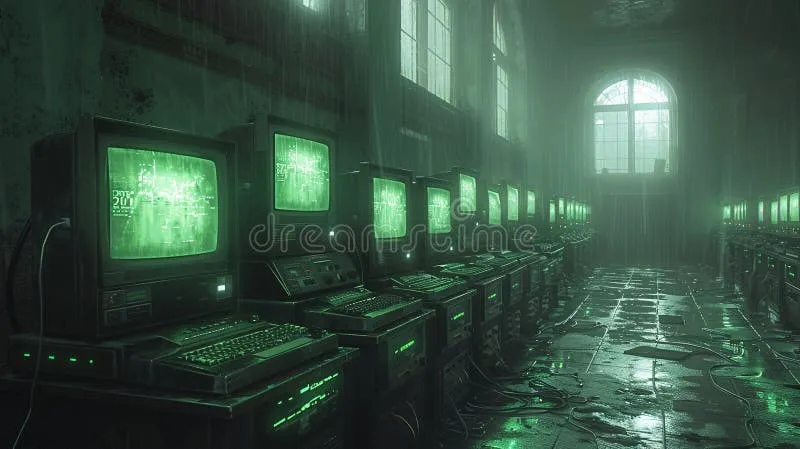
There's a specific kind of silence that settles over a once-viral thing. Not the silence of something that never existed — more like walking into a room where a party happened three weeks ago and nobody cleaned up. The cups are still there. The playlist is still technically running. But everyone left.
The internet doesn't really do funerals. It just... relocates its attention. And what gets left behind is stranger than most people realize.
The Mechanics of the Drop-Off
Viral momentum follows a shape that data people love to graph: a sharp vertical climb, a plateau that lasts maybe 72 hours if you're lucky, and then a cliff. What's less discussed is what the cliff leads to.
Take a moment like the "corn kid" phenomenon from 2022 — a genuinely wholesome clip of a seven-year-old enthusiastically describing his love of corn that became, briefly, inescapable. It spawned remixes, merchandise, a song that charted, brand partnerships. Then, within weeks, it was effectively over. The kid didn't disappear. The content didn't disappear. But the cultural oxygen that had been feeding it just... redirected.
Digital archivist and independent researcher Caitlin Morrow, who maintains several preservation projects focused on early 2010s internet culture, describes this as "the burial by accumulation" effect. "Nothing actually gets deleted in any meaningful sense," she told us. "It just gets pushed down. The new stuff weighs on top of the old stuff, and eventually you need to excavate to find it."
The algorithm, in this framing, isn't a discovery engine. It's a sediment layer.
What Actually Survives
Here's where it gets interesting: not all viral things decay at the same rate, and the ones that stick around longest are rarely the ones that seemed most significant at the time.
Remember the ice bucket challenge? The Harlem Shake? Gangnam Style? These feel like touchstones now, partly because they were so widely covered by mainstream press — they got written into the cultural record by people whose job it was to write things down. But for every one of those, there are hundreds of micro-viral moments that existed primarily in the feed and left almost no external documentation.
A Tumblr post that got 200,000 notes in 2013. A Vine that everyone had memorized the audio from. A Twitter thread that restructured how a whole corner of the internet thought about something for about six weeks. These things happened. They mattered, in a real-time, felt-in-the-body way, to the people who were there. But they're nearly impossible to locate now without knowing exactly what you're looking for.
"The search infrastructure just isn't built for this," says Marcus Webb, who runs a newsletter focused on internet history and has been cataloguing defunct social formats since 2018. "Google indexes what's currently linked to. Archive.org captures what someone thought to capture. But the spontaneous, ephemeral stuff — the comment threads, the reaction chains, the in-joke ecosystems — that's mostly gone in any practical sense."
The Haunting Problem
So what does linger? Mostly, the weird stuff. The remixes that went in unexpected directions. The parodies that outlasted the original. The context-stripped clips that get rediscovered by people who have no idea what they're looking at.
There's something genuinely eerie about scrolling into a YouTube video from 2011 that has four million views and 60,000 comments, all of which were written by people who are now a decade older and almost certainly not thinking about this video at all. The engagement is frozen there. The cultural moment it captured is frozen there. But the people who made it have moved on, aged, changed.
Morrow calls these "presence ghosts" — digital artifacts that retain the shape of human attention without any of its warmth. "The comments are the weirdest part," she says. "You can read through them and feel the energy of what it was like when this thing was alive. And then you remember that no one is ever going to add to that conversation again. It just sits there, fully formed, like a bug in amber."
For internet celebrities — the people who were briefly everywhere and then weren't — this dynamic gets more complicated. Their audience didn't just stop watching. In many cases, the audience actively forgot about them in a way that feels almost hostile, even if it wasn't intentional. The algorithm that amplified them became the same system that buried them, and it didn't feel anything either way.
The Archive Question
There's a growing conversation in certain corners of the internet about whether viral culture is worth preserving at all — and if so, who's responsible for doing it.
Institutional archives tend to focus on things that were already considered significant: news events, major cultural productions, government records. The Library of Congress has archived some Twitter data. The Internet Archive does heroic work. But the sheer volume of content being produced daily means that most of what happens online is essentially undocumented in any durable way.
Independent archivists like Morrow and Webb are doing what they can, but it's a fundamentally impossible task. "You can't save everything," Webb says. "So you end up making choices about what's worth saving, and those choices are just as arbitrary as the algorithm's choices about what to surface. You're just operating with different values."
What gets preserved, then, is partly a function of who cared enough to save it — and that introduces all kinds of biases about whose internet history gets to matter.
The Silence Is the Point
Maybe the most honest thing to say about the viral graveyard is that the silence isn't a bug. It's the whole design.
Platforms are not built to help you revisit. They're built to keep you moving forward, feeding you new stimulation before the last hit has fully metabolized. The forgetting is structural. The burial is intentional, even if no individual person intended it.
What haunts these dead moments isn't really a ghost in any metaphysical sense. It's just the residue of attention — proof that a lot of people looked at the same thing at the same time and felt something together, however briefly. That's a stranger and more fragile thing than we usually give it credit for.
The void isn't empty. It's full of everything that used to matter, waiting for someone to come looking.