Rot and Remember: The Strange Afterlives of Dying Digital Spaces
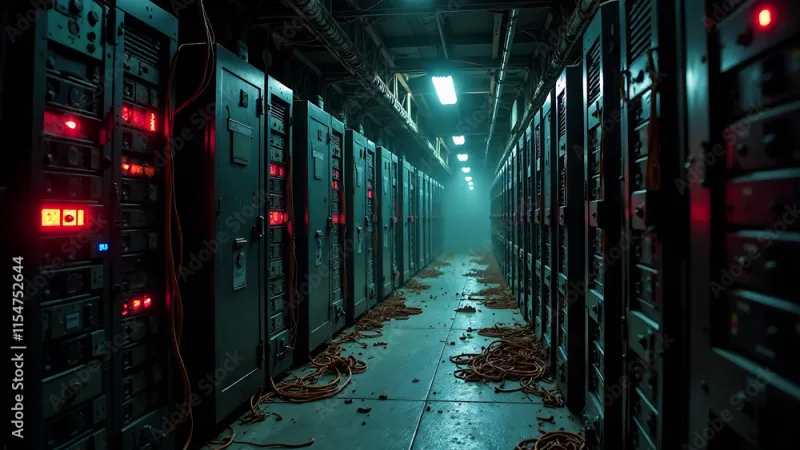
Photo: abandoned server room dark glowing screens digital decay, via as1.ftcdn.net
There's a specific flavor of eerie that hits when you stumble onto a forum last posted in 2009. The thread titles are still there. The avatars — tiny, pixelated, weirdly personal — still load. Someone named XxDarkWolf99xX asked a question about a video game that no longer exists on any active server, and three people answered him, and then everyone just... left. The silence that followed wasn't planned. It just accumulated, the way sediment does.
This is what digital decay actually looks like up close. Not a dramatic deletion, not a press release about shutdown dates. Just a slow exhale, and then nothing. And yet — and this is the part that keeps getting weirder the longer you sit with it — these spaces don't feel empty. They feel preserved. Like something got trapped inside them on the way out.
The Archaeology of Abandoned Bandwidth
Legacy platforms have a habit of becoming unintentional museums. Geocities is the obvious example — Yahoo nuked it in 2009, but not before the Archive Team scraped nearly a terabyte of raw HTML, animated GIFs, and deeply personal web pages into what is now the GeoCities Archive. People visit it constantly. Not out of nostalgia exactly, but out of something harder to name. A kind of forensic curiosity. You're not just looking at old websites; you're looking at what people thought the internet was for before anyone really knew.
The same phenomenon plays out across dozens of smaller platforms that never got the preservation treatment. Old message boards running on phpBB or vBulletin software, their SSL certificates long expired, their domains sometimes squatted and sometimes just quietly lapsed. Google Groups still hosts Usenet archives going back to 1981. You can read arguments about early internet etiquette from people who are now in their sixties, written when they were in their twenties, and the texture of those arguments feels nothing like anything happening online today. The stakes were different. The register was different. It reads like dispatches from another civilization.
What's strange is that these spaces weren't designed to mean anything after the conversation ended. Forums were infrastructure, not monuments. And yet the moment the maintenance stops, the moment the admins stop logging in and the spam filters start failing and the registration system breaks, something shifts. The platform stops being a tool and starts being a record.
APIs as Digital Fossils
Deprecated APIs are a subtler version of this. When Twitter killed off its v1 API back in 2013, it didn't just break third-party apps — it quietly deleted entire interaction patterns that had grown up around those apps. Tools that let people experience Twitter in genuinely different ways, visualizing follower graphs, archiving tweet streams, building weird ambient interfaces that turned the feed into something almost meditative. All of that disappeared not with a bang but with an error code.
Developers who built on deprecated APIs sometimes leave their projects up anyway, half-broken, returning empty JSON objects or error messages where data used to flow. There's a whole micro-genre of GitHub repositories that are essentially digital ruins — last committed to years ago, still technically public, still occasionally starred by people who found them while looking for something else. The README files read like notes left in an abandoned apartment. This project is no longer maintained. Feel free to fork.
Nobody forks. But people do read. And something about reading a README for software that no longer functions, written by a developer who has long since moved on to other things, produces a specific kind of melancholy that's hard to manufacture intentionally.
When Emptiness Becomes the Content
The more interesting question isn't why these spaces feel meaningful — it's why they feel more meaningful than a lot of what's being actively produced right now.
Part of it is signal-to-noise. A dead forum has zero engagement bait. Nobody is optimizing for retention on a message board that stopped accepting new members in 2011. The posts that exist there exist because someone actually wanted to write them, not because an algorithm surfaced an opportunity. There's something almost radical about content that wasn't trying to do anything except communicate.
But there's also something happening at the level of time. Active platforms exist in a kind of permanent present tense — everything is oriented toward the next post, the next update, the next engagement spike. Dead platforms exist outside of that. They're stuck, which means they're also free from it. You can read a thread from 2007 about the best way to mod an original Xbox and the information is either still true or it isn't, but either way it's not competing for your attention. It just sits there, patient, indifferent to whether you engage.
That indifference turns out to be rare enough that people find it genuinely restful.
The Ones That Know They're Dying
Some platforms have developed a weird self-awareness about their own obsolescence. LiveJournal is the clearest case in the US context — it's been technically alive for years, but the active English-speaking community has been aware of its own marginality for a long time. What's emerged from that awareness is a community that has made peace with being a relic, that has leaned into the specific texture of the platform precisely because it's out of step with everything else. The clunkiness is the point. The long-form posts, the comment threads, the friend groups — all of it reads as a deliberate rejection of the attention economy, even if that rejection started out as just inertia.
Something similar happened with certain Tumblr communities after 2018's NSFW purge gutted the platform's user base. The people who stayed weren't the ones who hadn't noticed what happened. They were the ones who decided the remaining community was worth staying for, even in a diminished form. Decay, in that case, became a filter. What's left is the part that actually cared.
Meaning in the Maintenance Gap
None of this is an argument for letting things rot on purpose. Platforms that stop being maintained also stop being safe, stop being accessible, stop being accurate. The spam that floods old forums isn't charming. The broken links aren't poetic. And the people whose personal data is sitting in databases that nobody is actively securing aren't benefiting from the cultural resonance of their old usernames.
But there's something worth sitting with in the observation that digital spaces can generate meaning in their decline that they never quite managed in their prime. That the absence of active curation can, under the right conditions, produce something that feels more honest than anything a living platform is currently serving up.
The void, it turns out, isn't empty. It's just quiet. And quiet, on the modern internet, is so unusual that it reads almost like signal.