Still Vibrating: The Dead Apps That Never Got the Memo They Were Gone
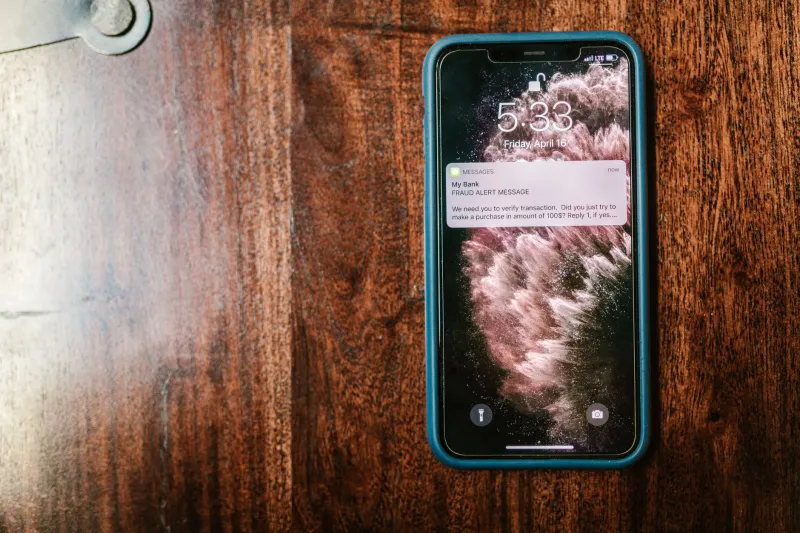
Your phone buzzed. You picked it up. The notification was from an app you haven't opened since the Obama administration's second term — or maybe it was a service that officially shut down sometime last year, whose farewell email you vaguely remember skimming before archiving. Either way, it's still here. Still pinging. Still acting like it has something important to tell you.
Welcome to the notification graveyard, where defunct platforms and abandoned services keep sending signals into the void long after anyone is still listening.
The Signal That Outlived the Source
Most people assume that when an app dies, it dies completely. The servers go dark, the company dissolves, and whatever was living inside your phone quietly fades away. That's not really how it works.
A lot of what we call "notifications" are baked into operating-system-level infrastructure that doesn't check whether the originating service is still alive before delivering a payload. Apple's Push Notification Service and Google's Firebase Cloud Messaging act as intermediaries — middlemen between an app's backend and your device. If a company scheduled recurring messages before shutting down, or if their backend is limping along on autopilot with nobody left to turn off the lights, those messages can keep arriving.
Some apps also store notification logic locally. Scheduled alerts, recurring reminders, and in-app triggers don't always require a live server to fire. They sit embedded in the app's own code, running on your device's own clock, completely indifferent to whatever happened to the company that built them.
Then there are the zombie configurations — push tokens and notification permissions that never got revoked, lingering in system registries because nobody on either end bothered to clean them up. Your phone remembers the relationship even when one party has completely ceased to exist.
The Brands That Ghosted Their Own Software
Think about how many services have technically "ended" without ever fully disappearing. A startup shuts down but leaves its app in the store for eighteen more months because nobody files the paperwork to remove it. A mid-size social platform gets acquired, the acquirer loses interest, and the product quietly stops being maintained — but the app itself stays installed on millions of devices, still authorized to send alerts, still technically functional in the narrowest possible sense.
This happens constantly in the US app ecosystem, where the lifecycle of a digital product is increasingly disconnected from the experience of the people using it. Companies merge, pivot, or simply run out of money. The product team disperses. The servers stay up on whatever hosting contract was pre-paid. The push notification system keeps firing because no one issued the command to stop it.
Some of the most haunted categories here are fintech apps, fitness trackers, and early-era social platforms — services that accumulated large user bases, got swallowed by consolidation or competition, and left behind dormant software that still has your contact info and your notification permissions.
What It Does to Your Head
There's something genuinely unsettling about receiving a message from something that no longer exists. It's not quite the same as a missed call from an unknown number or a spam email — those feel external, alien. A notification from a dead app feels different because you invited it in. You downloaded the thing. You gave it access. You let it vibrate your phone.
Psychologically, the effect can be disorienting in a way that's hard to articulate. Your brain is conditioned to treat notifications as signals from living systems — from people, from services, from ongoing relationships. When a signal arrives from something that's technically dead, it creates a small but real category error. The alert looks like communication. It behaves like communication. But there's no one on the other end.
For some users, it triggers a kind of digital grief — a reminder of something they used to rely on that no longer exists. For others, it's more like paranoia: why is this still happening? Who is still running this? What do they still know about me?
That last question is worth sitting with.
The Data That Didn't Leave With the App
When a platform shuts down or gets acquired, its notification infrastructure is usually the least of anyone's concerns. The real question — the one most users never ask — is what happened to everything the app knew about you.
Push notifications are just the visible edge of a much larger data shadow. The app that's still vibrating your phone probably also still has your email address, your usage history, your location data if you granted that permission, and possibly payment information depending on what it was. When companies dissolve or get absorbed, that data doesn't evaporate. It gets sold, transferred, or left sitting in storage that someone is technically still paying for.
The notification is almost like a tell — a small signal that the data relationship hasn't fully ended even if the product relationship has. Something, somewhere, still knows your device identifier. Something still has your number, metaphorically and sometimes literally.
How to Actually Kill It
The cleanest solution is also the most obvious: revoke notification permissions for any app you don't actively use, and delete anything you haven't opened in six months. On iOS, you can manage this in Settings under Notifications — it's not glamorous, but it's effective. Android users have similar controls, plus the ability to see exactly which apps have been granted which permissions at a granular level.
For apps that are genuinely defunct — where the company is gone and the product is abandoned — uninstalling is usually enough to stop locally-triggered alerts. Stopping server-side push notifications from a dead backend is trickier, but revoking the app's permissions before uninstalling typically severs the connection.
If you're getting alerts from something you can't identify or don't remember installing, that's worth investigating more carefully. Dormant adware and stalkerware can masquerade as legitimate app notifications. Not every phantom buzz is just a sad relic of a dead startup.
Signals from Nowhere
There's a version of this that's almost poetic, if you tilt your head at it right. The internet is full of dead things that still transmit — old pages that still load, social profiles of people who've logged off forever, email chains that never got a reply. Notifications are just another layer of that. The infrastructure outlives the intention. The signal outlives the source.
Your phone is a museum of every digital relationship you've ever had, and some of those exhibits are still trying to get your attention from behind the glass.
The buzz you felt just now — maybe it was real, maybe it was phantom. Either way, something that used to matter to you is still trying to matter. Whether you answer it is up to you.