The Filter Is Gone. Your Face Didn't Get the Memo.
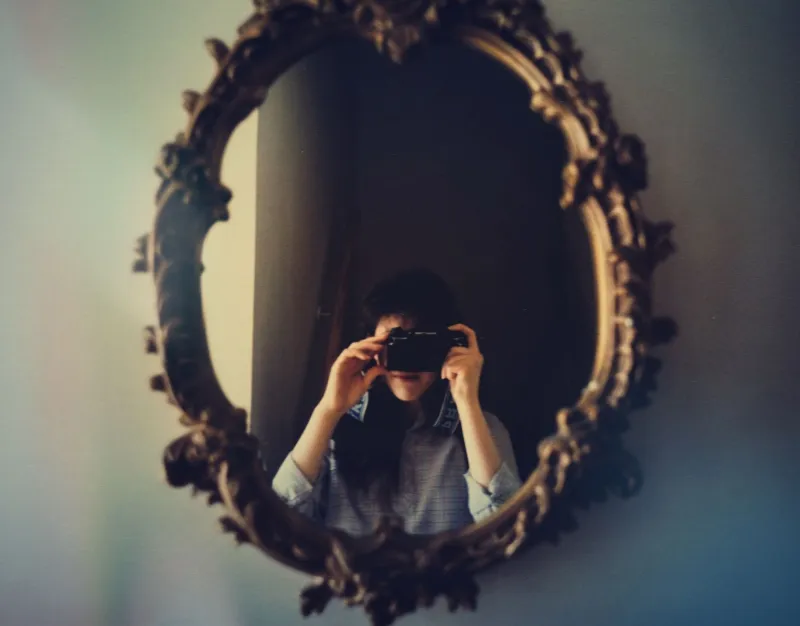
There is a specific kind of digital haunting that happens when you open an old selfie and the filter is gone. Not the photo. The photo is still there. But the soft-focus glow, the dog ears, the impossible cheekbones—whatever effect made you feel like a slightly better version of yourself for three minutes in 2017—has stopped rendering. The app that made it has been updated, deprecated, or abandoned. The file remains. The face you saved does not.
This is not a technical glitch so much as a cultural one. We spent years treating filters as temporary playthings, stickers we could slap on a photo and forget. But those effects became part of how we remembered ourselves. They were the default camera settings for a whole era of online life. And now they are disappearing, quietly, one app update at a time.
The Selfie as Unsupported File Type
Most people assume a saved photo is a saved photo. You take a picture, you apply a filter, you post it, you keep it. But filters were never just a layer of paint. Many of them were rendered live by the app, using face-tracking data and real-time effects. When you saved the image, the app flattened the result into a file. That file should survive. But the ecosystem around it does not always cooperate.
Sometimes the saved image is fine, but the memory of how it was made is gone. You look at a photo and remember the filter more than the day. You remember the exact AR mask—the one with the sparkles that made your eyes look wet—and you cannot find it anymore. The app's effect library has been reorganized. The creator's account is gone. The filter has been retired, like a character on a canceled show.
Other times, the photo itself is affected. Re-uploads to new devices, cloud backups, and platform migrations can strip metadata or reprocess images in ways that flatten the effect. The result is a picture that looks almost right but slightly off, like a memory that has been retold too many times. The face is yours. The vibe is a ghost.
Nostalgia With a Broken Renderer
We are used to nostalgia being about places, songs, and smells. But digital nostalgia has a different texture. It is about interfaces. It is about the specific color of a filter and the specific shape of a mask. It is about the way a camera app made you feel when you opened it.
When those effects stop working, the nostalgia becomes incomplete. You cannot recreate the photo. You cannot open the app and get the same result. The effect was never a file you owned. It was a service, a temporary visual language, a product feature that could be removed whenever the company decided it was time for a redesign.
This raises a strange question about ownership. If you saved the selfie, you own the image. But do you own the face? The version of your face that was shaped by a filter? The answer is murky. The filter was made by someone else, often a third-party creator, and hosted on a platform that could delete it without notice. Your face was the canvas, but the style belonged to the app.
The Quiet Rewrite of Old Memories
Platform updates are usually framed as improvements. Better camera. Faster processing. New effects. But every update is also a small act of erasure. The old effects are retired. The old interfaces are replaced. The old photos are left to fend for themselves in a format that may or may not render correctly on the next device.
For people who grew up online, this means that their personal archives are full of images that no longer look the way they did when they were posted. The photo is the same file, but the context is gone. The filter that made it feel like a moment has become a technical artifact. You look at it and think, 'That was me.' Then you look closer and think, 'Was it?'
This is not a tragedy. It is a strange kind of cultural drift. The face you presented online was always a collaboration between you, the camera, the app, and the platform. When the app disappears, the collaboration loses a member. The image remains, but the authorship becomes harder to untangle.
What We Owe Our Old Selves
Maybe the answer is not to preserve every filter. That would be impossible, and probably not worth it. But there is something to be said for acknowledging that old selfies are not just photos. They are records of a specific visual culture. They are evidence of how we wanted to be seen, and how the tools of the time helped us get there.
The next time you find an old selfie with a filter that no longer works, do not just scroll past it. Notice the gap. Notice the missing effect. Notice the way the image still carries the intention even if the technology has moved on. The filter is gone. Your face did not get the memo. That might be the most honest version of the picture you have.