Last Transmissions: The Dying Apps That Won't Stop Sending You Messages
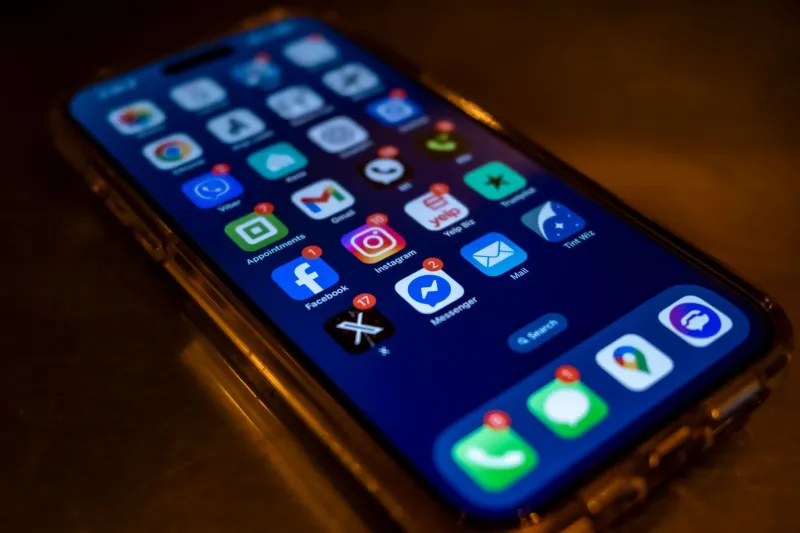
There's a specific kind of notification that hits differently. Not the usual dopamine drip of likes or messages — something stranger. A banner at the top of your screen from an app you forgot you had, telling you about a "Final Clearance Event" or a "Service Migration" happening on a date you'll probably miss. You swipe it away. You don't open the app. You don't delete it either.
And then it happens again next week.
This is the notification graveyard — a digital purgatory populated by apps in their death throes, still burning through your battery life to send you messages that mostly say, in various polished marketing fonts: we're almost gone.
The Art of the Goodbye Ping
Platforms have always known that endings are powerful. Scarcity drives behavior in ways that abundance never could. When a streaming service loses a licensing deal, viewership on that title spikes the week before it disappears. When a clothing retailer announces a going-out-of-business sale, the crowds show up in a way they never did when the store was thriving.
Apps learned this lesson and weaponized it.
A dying app's final marketing push often outperforms anything it sent during its peak. Shutdown announcements get opened. Server migration emails get clicked. "Download your data before we delete it" messages create a brief, frantic re-engagement that the platform's actual product couldn't sustain. The death of the thing becomes the most compelling content the thing ever produced.
What's strange is how familiar this feels — and how little we question it. You'll open a notification from a meditation app you used twice in 2021 just because it says your account is about to be purged. The app had nothing interesting to say when it was alive. Now that it's dying, suddenly it has your full attention.
One-Way Channels to Nowhere
What defines these interactions is their fundamental asymmetry. The app is talking. You are not expected to respond — not really. There's no community waiting on the other side of that notification, no feed refreshing with new content, no one to DM. The app has already hollowed out. What remains is just the communication infrastructure, pinging away on autopilot.
It's a little like getting mail at a house you moved out of. Someone is still sending it. Someone set up that system once and it just kept running. Except in this case, the mail is following you, finding you on your new phone, slipping past your Do Not Disturb settings to remind you that something somewhere is ending.
Some apps don't even have a real shutdown to announce. They just go quiet — no new features, no active user base, a skeleton crew maintaining the servers — and yet the notification engine keeps firing. Monthly reminders to "check in." Seasonal promotions for a product nobody's buying. These aren't messages from a living platform. They're echoes from a machine that nobody remembered to turn off.
Why We Don't Delete Them
Here's the part that's genuinely interesting: most people don't uninstall these apps, even when they know the service is dead or dying. Ask around. Scroll through the back pages of your own phone. There are apps sitting in folders with notification badges you've never cleared, for platforms that may not even have functional servers anymore.
Part of it is friction — deleting an app is a small decision, and small decisions have a way of never getting made. But there's something else operating underneath the friction. Something closer to sentiment.
These apps represent moments. A food delivery service you used during a particular winter. A social platform where you had a version of yourself that doesn't exist anymore. A fitness app tied to a New Year's resolution from three years back. Deleting the app feels, on some irrational level, like deleting the memory — like confirming that the thing is really over.
So the app stays. And the app keeps sending messages. And you keep not reading them, but also not making them stop.
The Platform That Cries Wolf
Not every "final notice" is final. This is worth saying plainly. Some platforms have discovered that shutdown announcements function as a kind of reset button — a way to generate buzz, re-engage lapsed users, and attract press coverage, all without actually shutting down. The announcement becomes the product.
There's a cynicism to this that's hard to ignore. If you've ever rushed back to an app because it announced it was closing, only to find it still running six months later with a new funding round, you've been on the receiving end of death as a marketing strategy. The platform treated its own mortality as a campaign.
This muddies the water for every genuine shutdown that follows. When the real goodbye notification arrives — the one that actually means the servers are going dark — it looks exactly like all the fake ones. Same subject line. Same urgency. Same request to export your data. You've been conditioned to ignore it.
Signals from a Dead Channel
There's a phrase in radio for what happens when a transmitter keeps broadcasting after the station has closed: a ghost signal. The equipment is still running. The frequency is still occupied. But there's nobody on the other end choosing what to send — just old content, or static, or silence punctuated by automated tones.
The notification graveyard runs on ghost signals. Apps that have lost their purpose, their funding, their user base, or their will to iterate — but whose notification pipelines are still warm, still firing, still reaching into your pocket to tap you on the shoulder about something that doesn't matter anymore.
What do you do with that? There's no clean answer. You could go through your phone right now and delete every app that hasn't served a real function in the last six months. That would be the tidy, intentional thing to do. But you probably won't, because something about those apps still feels like yours — even if all they do is send you goodbye messages you never read.
Maybe that's the most honest thing the internet has ever told us about how we handle endings. We don't close them out. We just let them run in the background, pinging away, until one day the signal finally cuts and we don't even notice it's gone.