Saved for Later, Lost Forever: The Screenshot Habit That's Eating Your Memory

There's a folder on your phone right now. Maybe it's called "Screenshots." Maybe it's buried inside a sprawling Camera Roll with no organizational logic, just a timeline of everything you ever decided was worth keeping. Memes from 2021. A recipe you never cooked. A tweet that made you feel seen for exactly four seconds. A DM you weren't sure how to respond to.
You saved all of it. And you remember almost none of it.
This isn't a storage problem. It's something stranger — a quiet glitch in how we process experience when we outsource the act of remembering to a device.
The Capture Reflex
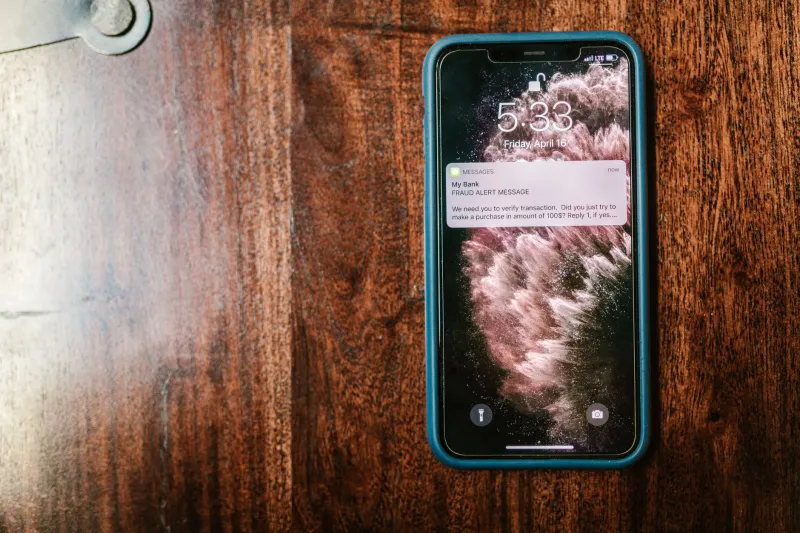
Screenshotting has become less of a deliberate choice and more of a reflex. Someone posts something funny, something infuriating, something that hits different at 1 a.m. — and before the feeling even fully registers, your thumb is already pressing both buttons. The capture happens before the experience does.
Psychologists call this the "photo-taking impairment effect," a phenomenon studied by Fairfield University researcher Linda Henkel, who found that people who photograph objects during museum visits remember significantly less about them than people who simply look. The act of delegating memory to a camera — or a phone, or a screenshot — signals to the brain that it doesn't need to do the work. The device has it covered.
But here's the thing: the device doesn't actually have it. Not in any meaningful sense. It has a file. A flat, static image with no emotional texture, no context, no thread back to why it mattered in the first place.
The Illusion of Possession
There's a particular comfort in saving something. It feels like ownership. Like you've pulled a moment out of the stream and pinned it down somewhere it can't drift away. Social media is engineered around ephemerality — posts disappear, feeds move fast, Stories evaporate after 24 hours — and screenshotting feels like a small act of resistance against that churn.
But what we're actually doing is collecting ghosts.
Pull up your Screenshots folder right now. Scroll back six months. How many of those images mean anything to you? How many do you even recognize? There's probably a chunk of them you can't place at all — screenshots of screenshots, out-of-context text exchanges, a receipt for something you already returned. The collection grew, but the meaning didn't come with it.
What happened is that the act of saving replaced the act of processing. You didn't sit with the thing. You didn't let it land. You captured it and moved on, which is functionally the same as ignoring it — except now you have a file that tricks you into thinking you didn't.
The Saved Posts Graveyard
Instagram's "Saved" feature is where intentions go to die. Every person who has ever used it has, at some point, opened that grid and felt a strange dissociation — a wall of content they apparently found meaningful enough to bookmark, now staring back like artifacts from someone else's life.
TikTok's "Favorites" folder operates the same way. So does Reddit's "Saved" tab, which is widely acknowledged to be a black hole that nobody ever actually revisits. Pinterest boards. Browser bookmarks. Note apps full of links to articles that were going to change everything.
The saving is the point. Not the saved thing.
This is a behavior the platforms understand and quietly encourage. Every bookmark, every save, every "I'll come back to this" interaction is a data point, a signal of engagement, a reason to keep you inside the app a little longer. The archive you're building isn't really for you. It's for the algorithm, which now knows exactly what kinds of things make you reach for the capture button.
What Gets Lost in the Compression
Memory, actual human memory, is not a recording. It's a reconstruction. Every time you remember something, you're rebuilding it from fragments — emotional residue, sensory echoes, narrative logic. That process is lossy by design, but it's also how meaning gets made. The brain edits for importance. It connects the thing you experienced today to the thing you felt five years ago. It builds a story.
Screenshots don't do any of that. They freeze a moment in amber and then sit there, inert, waiting for a retrieval that usually never comes. They don't connect to anything. They don't evolve. They just accumulate.
And the more you rely on them, the more your brain steps back from the work of actual retention. Why remember something your phone already has? The cognitive shortcut makes sense in the moment. The cost shows up later, when you realize you've been present for thousands of experiences that left no real trace.
The Ritual Without the Religion
There's also something worth naming about how documentation has become a performance — not just for audiences, but for ourselves. Screenshotting a moment is a way of declaring it significant. It's a ritual that mimics memory-making without actually producing it.
We screenshot things to prove to ourselves that we cared. The capture is the feeling. Once the image exists, the feeling has somewhere to live — externally, in a folder, where we don't have to carry it. Which sounds like relief until you realize what you've actually done is offload the experience entirely.
Some people screenshot conversations not to reference them later, but to feel like they could. The optionality is the point. I could go back and read this. I could revisit this moment. That potential feels like presence, even when it's actually a form of distance.
Breaking the Compression Loop
None of this means you should stop saving things. The impulse to preserve is real and sometimes genuinely useful — you do occasionally need that screenshot of your boarding pass or the address someone texted you. Practical capture has always existed.
But the reflexive, emotional capture — the screenshot-before-you've-felt-it habit — is worth interrogating. Next time something stops you mid-scroll, try staying with it for a few seconds before reaching for the button. Let the image or the text or the idea actually arrive. Notice what it does to you. Then decide if you need to save it, or if you already have it.
The brain is better at this than we give it credit for. It was doing the job before the phone existed. It can still do the job when the phone is in your pocket.
Your Screenshots folder will be fine without another entry. The question is whether you will be fine without learning to let something land.